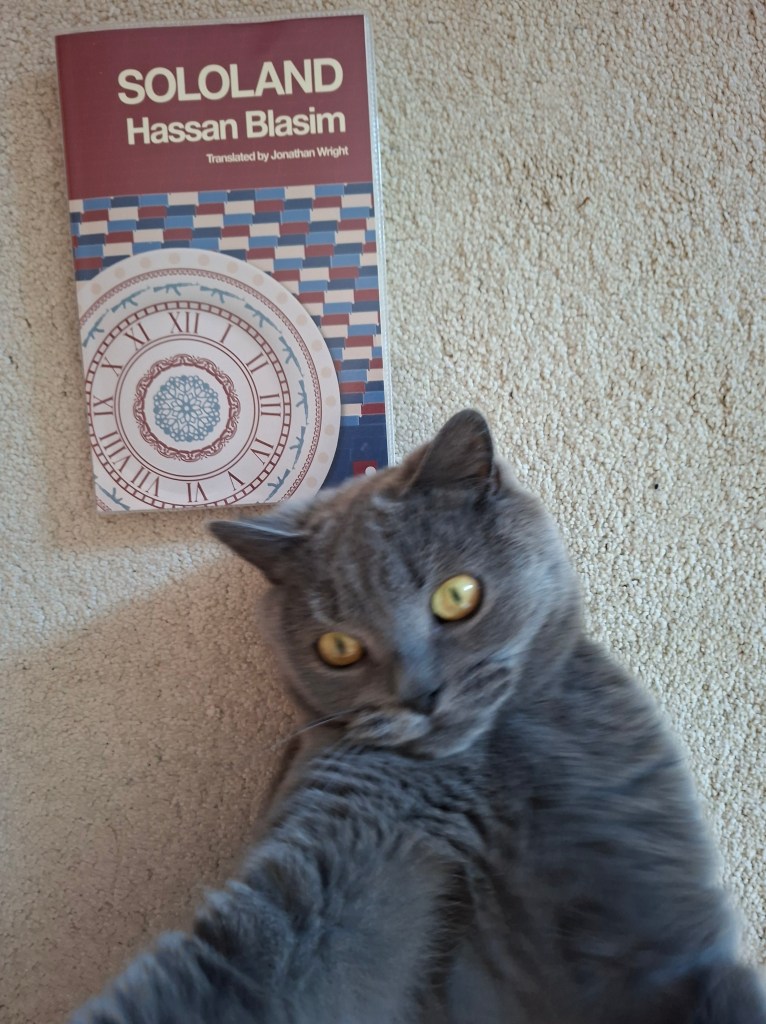
Sololand
Hassan Blasim
At one point in one of the three stories that make up this book, the narrator, Bulbul is talking to a friend, Aboul Qasim, who muses that, “when you read a foreign novel” “it’s like you’re living there. So reading makes you an outsider”. This certainly felt very true to me in this case. Sololand focuses on experiences very different to my own – those of Iraqi men, both living in Iraq and living abroad as refugees who have fled. Their lives are full of violence, threat and danger. The second story, “The Law of Sololand”, is particularly horrific (and, in my opinion, the most effectively told). In all three stories, death, injury and murder are commonplace. Life is brutal and harsh. Moments of hope are brief and soon undercut; punishment is unrelenting.
Unsurprisingly, then, the narrators of these stories are bitter and angry. They are not necessarily easy to like, although it is hard to deny their right to be furious. Yet stronger, though, a sense of disappointment pervades these stories – all three narrators return to the idea that Iraq could and should be a great country. Blasim himself packs these pages with details of Iraq’s rich history and culture, as if eager to show the readers the full extent of this possibility.
Thus, this book exposed me to a lot of information about Iraq and made me realise how little I knew. Exactly as Aboul says, it made me an outsider. His words might lead us to think that through this outsiderly glancing in we might learn something. But the book undercuts even that shard of hope. Aboul goes on to say that “by their nature people soon forget”. They must because “if you don’t forget, you’ll go mad from thinking too much”. Much as I would love to end this account with a positive rejoinder, I cannot – I fear Aboul is right. This book is full of despair – a despair that needs to be seen, certainly, but also one that doesn’t bear too much thought. If I’m honest, I wouldn’t have wanted to spend any longer in its company.


Leave a comment