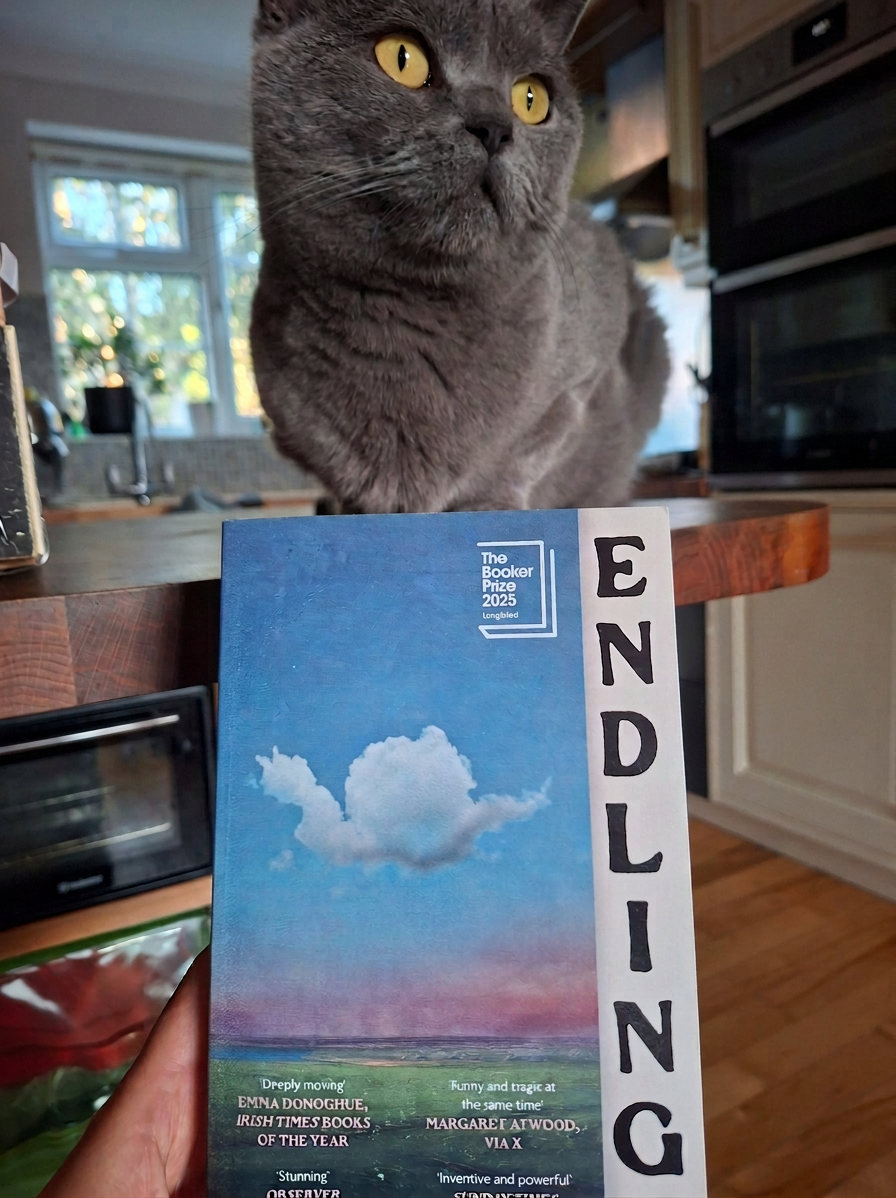
Endling
Maria Reva
This novel has two epigraphs and, reading them, I suspected I’d enjoy what was to follow (I do like a good epigraph). The first is from Chus Pato: “People don’t live history, they live their lives. History is a catastrophe that passes over them”. The second is from Zsuzsi Gartner: “I’d rather go down in flames, quite frankly, than have a nice little book. I’d rather go down screaming in flames. You can quote me on that”. One thing that especially entertained me about this pair of quotations was the contrast in tone – the philosophical gravitas of the first is undercut by the colloquial comedy of the second. It is an apt juxtaposition, as the novel itself balances seriousness and humour; it is set in Ukraine at the time of the Russian invasion, but tells a farcical tale of a scientist, Yeva, obsessed with rare snails who is drawn into a plot to kidnap thirteen bachelors as a protest against the marriage industry.
If you’ve read some of my other accounts on this blog, you’ll know that I approve heartily of any book that refers to itself, and this book ticked my self-referentiality box in a big way. The novel’s second section breaks the initial narrative and includes, among other things, a series of letters between the author and a magazine to which she has submitted an article; the magazine feel that “its tone would not quite fit the sensibilities of our readers” while the author argues that its “dark humour” is quintessentially Ukrainian, and therefore in keeping with the magazine’s request for her “perspective as a Ukranian expatriate”. She asserts that such humour gives “people who live in uncontrollable circumstances a sense of power”.
And indeed, there is something slightly uncomfortable about this novel’s mix of light-heartedness and violence. It is, however, also very funny, in its own macabre way. I enjoyed it very much.


Leave a comment