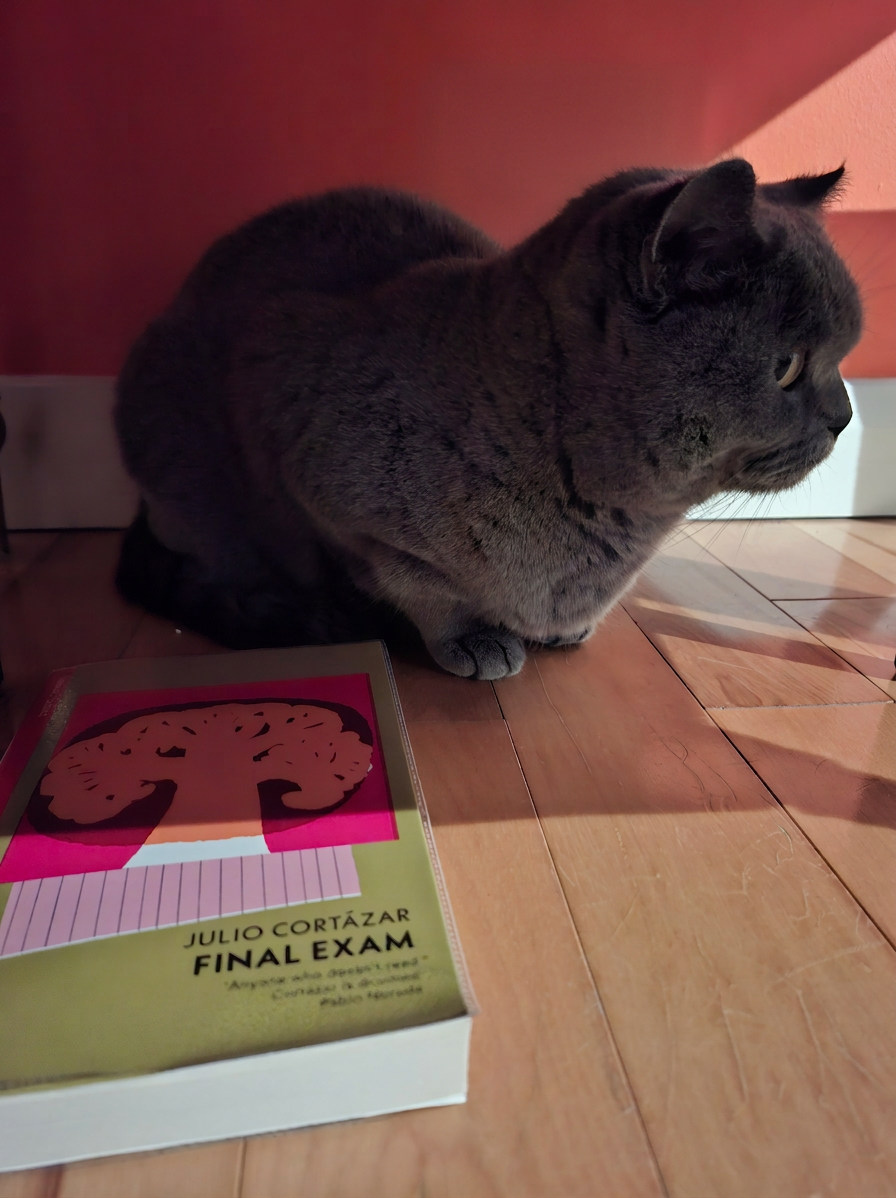
Final Exam
Julio Cortázar
This is the kind of book that, had I come across it at the wrong moment, I might not have got along with. Fortunately, it’s been a while since I last read anything particularly experimental and I was in the right frame of mind to appreciate its quirkiness.
The novel follows a group of four friends in the hours before they take their final university exam. They wander around town, drink and talk. And what conversations they have! As one character comments, “how much a person learns being with all of you […] Now all we need is an excursion through music, a touch of painting, two jiggers of psychoanalysis, and then everybody goes home”. The novel’s pages are filled with poetry, philosophy and many a quotable line. I particularly enjoyed one character’s observation that “I liked writing, I enjoyed myself as I did it. It was pleasurable suffering, like having a well-scratched rash – it bleeds but you like it anyway”. I was also struck (given my fondness for quotation) by another character’s remark that “our grandparents filled what they wrote with quotations; now it’s considered vulgar. But, the quotations help us avoid saying what someone already said well badly”.
Not everything these characters say is quite so meaningful. At times, the conversation drifts into the surreal; one character tells the others that “these are the most diarrheic violins I’ve ever smelled in my life”. Time and again, thoughts are begun but left unfinished and many a sentence is interrupted mid-way through; thus, the novel attains a fragmented quality.
Perhaps the main reason I enjoyed this novel more than I thought I might, though, is that it surprised me. At the start, I was convinced it would be a plotless affair – I was sure the characters would wander and talk from the first page to the last. But, much to my surprise, a narrative did emerge – and a sinister one at that. Although it is never fully clear what is happening, there are disconcerting suggestions that all is not well: a fog that may not be a fog, unusual happenings, sudden acts of violence. The novel becomes eerie and unsettling.
For me, this background narrative made the novel’s belief that ‘the worst thing is a fear of words’ all the more poignant. And indeed this novel is anything but afraid. It is, rather, as one character proclaims,
‘bedazzlingly
—keep an eye on that little adverb for me—
thought.’
I enjoyed such playfulness thoroughly.


Leave a Reply