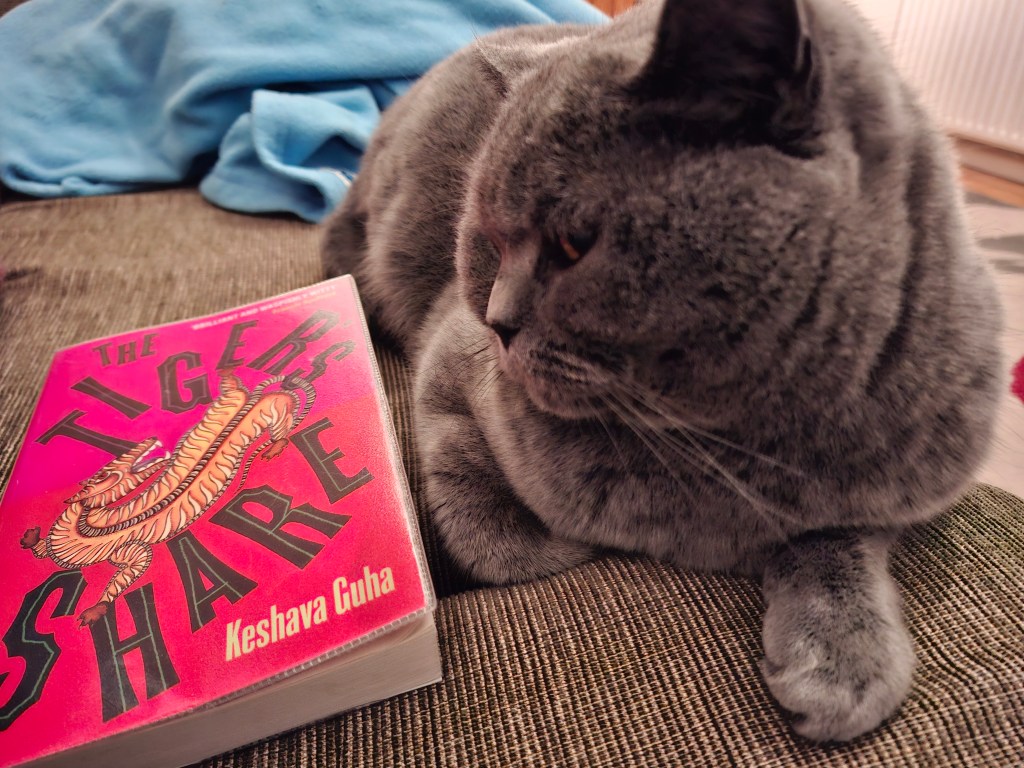
The Tiger’s Share
Keshava Guha
It took me a while to get into this book. At first, I found its narrator, Tara, unremarkable and considered the story she was telling—of family politics, sibling rivalries and questions of inheritance—pedestrian.
I couldn’t have been more wrong.
The further I read, the more I came to appreciate the Tara’s acerbic wit. On matters of class, gender and the living conditions in Delhi, she is sharply satirical and her quips are frequently dark; she remarks at one point that ‘if Delhi’s human-fucked seasons were a set of tests of the viability of life in conditions of escalating horror, then July was the point at which you had to ask at what cost life itself was worth preserving’. Her observations were striking, sometimes shocking and often made me smile.
Which isn’t to say that I agreed with her or trusted her. Although she is undoubtedly unreliable, the moniker ‘unreliable narrator’ seems too crude. It doesn’t quite capture the subtle way in which Guha invites us to question the authority of this narrative voice.
More to the point, no one in this novel is wholly trustworthy or reliable. No character is entirely likeable and some of the behaviour Tara narrates is startlingly strange. The novel tells two parallel tales: Tara is recruited by her friend Lila to assist her as, after her father’s death, her brother, Kunal, tries to take control, asserting himself as financial and moral head of the family. At the same time, Tara negotiates her own family drama involving her brother, Rohit, and his inheritance. These narratives very obviously touch on themes of masculinity, feminism, privilege and entitlement. Neither provides any straightforward answers; it’s far from clear who’s in the right. By the end, I admired this novel for its murky and fascinating moral ambiguity.


Leave a Reply