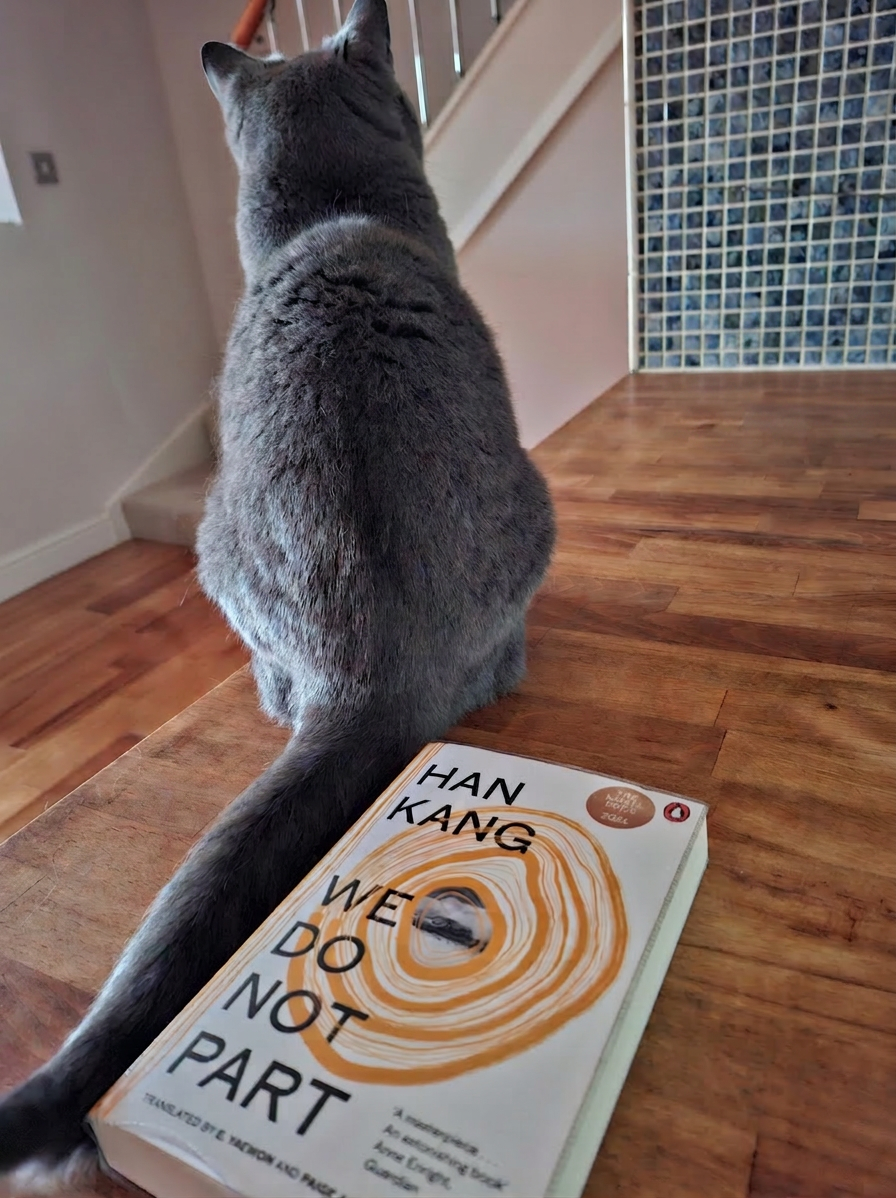
We Do Not Part
Han Kang
To me, this was, despite being a book about un-beautiful things, a beautiful book. It is specifically, about the Jeju massacre that took part in South Korea between 1948 and 1954 – about the horror of that mass killing and its traumatic after-effects. The narration is, however, far from brutal. That isn’t to say it shies away from the harsh realities of its subject matter – some of its descriptions were so visceral I winced. And yet there is a gentleness here that is perhaps unexpected.
This comes, in part, from the way in which the book blurs the lines between fantasy and reality. This occurs at a plot level; the book begins with a dream and, from that point onwards, it’s never entirely clear what is imagined and what a ‘true’ occurrence. It is also present at the level of language, through the personification of objects (I especially liked “Inseon’s long black coat hung on the wall, it’s shoulders seemingly drawn together in thought”). None of this feels particularly fantastical, however. Instead, it captures something very real about trauma and how it feels to live with it.
As I questioned what was ‘really’ taking place, it felt to my that I was experiencing, at least in part, the unstable world that trauma creates. The characters themselves, in a quietly philosophical manner, reflect on this uncertainty. One of the characters, Inseon, realises that “it can be difficult to distinguish forbearance from resignation, fortitude from loneliness”. She says she “thought about how difficult it can be to tell these emotions apart on the basis of facial expressions and gesture, about how the person in question may struggle to distinguish these feelings in themselves”.
Inseon reminds us that there is much that is mysterious about the human condition; in keeping with this realisation, this book poses far more questions than it answers. I found its ambiguity wonderfully, sadly, movingly haunting.


Leave a comment