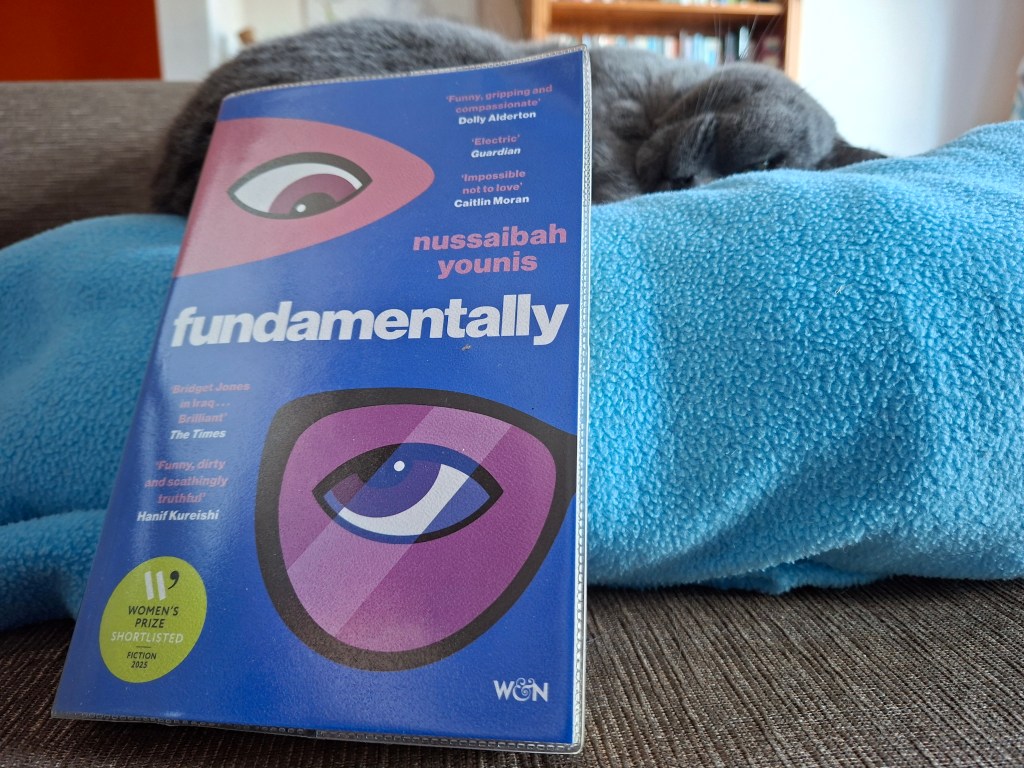
Fundamentally
Nussaibah Younis
Fundamentally’s premise is controversial one – it is about ISIS brides. Specifically, it follows Nadia, newly arrived in Iraq from London with a view to running UNDO, a fictional UN programme whose aim is to deradicalize them. Even more surprisingly, given its serious subject matter, this is a comic novel that satirizes the UN, well-meaning Westerners and Iraq itself. Nadia’s colleagues are ludicrous, from the over-earnest Sherri who declares ‘I think yoga is a basic human right, you know?’ to the brazenly corrupt who care little and are focused solely on furthering their own interests. Nadia is well-meaning but inept and scathingly self-aware; her self-laceration is one of the main sources of the novel’s comedy. When she meets one official, she tells us she ‘was comforted by his use of my title; status gives you scope to absorb minor failures’.
The very best lines in the novel, though, are reserved for the ISIS brides themselves, who highlight the absurdity of the media’s portrayal of them as dangerous radicals with pithy clarity. One woman remarks that, once she arrived in Iraq, ‘I didn’t shoot guns; I just made a lot of stuffed aubergines. Really, a lot. I couldn’t kill anyone, except with cholesterol’.
Alongside the comedy, this novel is woven through with wisdom and insight, presenting a nuanced analysis of the reasons these women had for joining ISIS and the devastating consequences it has had for them. Juvenile misjudgement has left their lives ‘forever paused, stuck on a freeze-frame of [their] most wretched moment’.
Nadia’s experience leads her to reflect on her own upbringing and to unpick some of the inconsistencies when it comes to society’s approach to religion more broadly ‘what is moderation in religion, anyway, other than a tolerance for dissonance? God’s instructions, issued over a thousand years ago, will always be extreme by contemporary standards. We protect religious freedom, but expect people to cherry-pick which religious teachings they observe’.
For me, the novel not only proposed this dilemma, but enacted it. The juxtaposition it creates between Nadia and Sara, an ISIS bride to whom Nadia becomes particularly attached, is effective and raises questions about Western hypocrisy and superiority and the line between moderation and extremity. A very funny novel, then, but also a thought-provoking one.


Leave a Reply