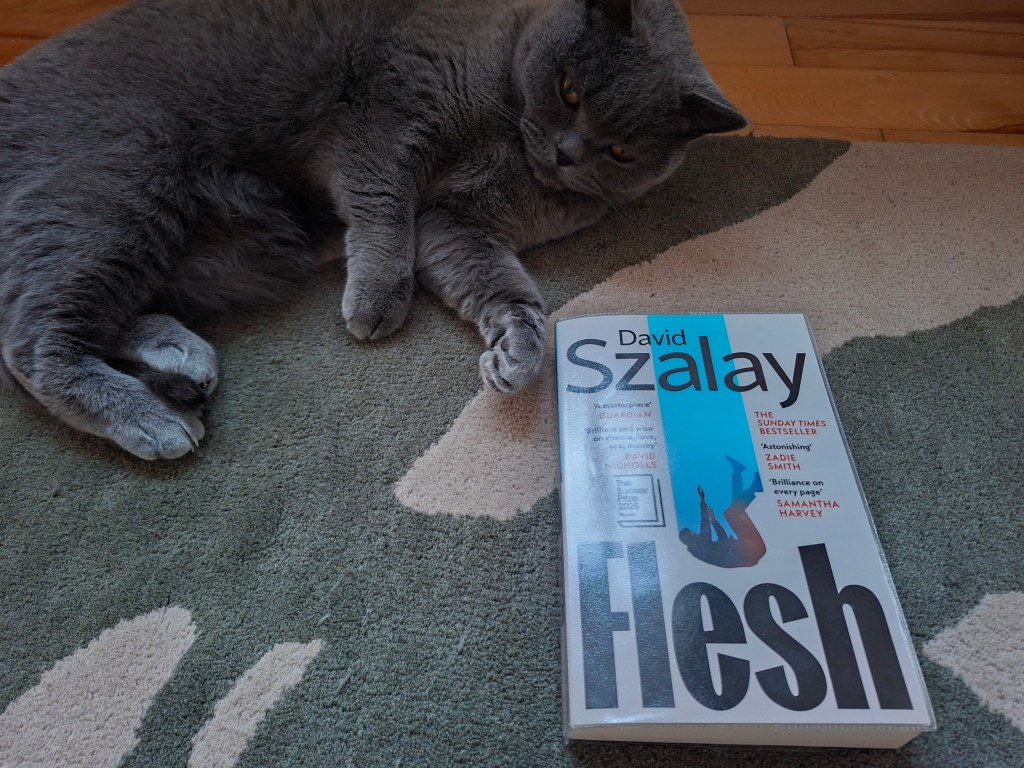
Flesh
David Szalay
I’d place this novel firmly in the category of books I admired rather than enjoyed. I could see that it was skilfully done, but it was a relief to get to the end. As I read the last line, my thought was: ‘well, that was depressing’.
The tale is hardly a cheerful one. The novel follows István through a life littered with tragedy. The book portrays the many ways in which life can be harsh, relationships dissatisfying and fate cruel.
This isn’t why I found it gloomy, though – lots of novels tell similarly tragic tales and yet leave me feeling hopeful or uplifted. Here, the thing that got me down, at least in part, was István himself. He’s reserved and not exactly communicative; he says little other than ‘yeah’ or ‘okay’. As a result, pretty much every conversation in the novel has a staccato, clipped feel that, to me, was intensely frustrating; I became increasingly desperate for István to say something, anything, of some significance.
But he doesn’t. Because he’s not that kind of character. Mostly, he’s detached and for good reasons. When he gets back from his time in the army, the narrative explains that ‘the things that are so important to him—the things that left him feeling that nothing would ever be the same again—they just aren’t important here’.
The prose is quite sparse, which adds to this feeling of detachment. The matter-of-fact descriptions left me feeling the numbness István describes. This novel offers not only an account of detachment but an experience of it.
I appreciate that this is all very skilful and effective. It’s a masterful portrayal of a particular kind of character, a very real personality type and an existence that many people lead. I’m glad I read it. But it’s not a reading experience I’d want to have too often.


Leave a Reply